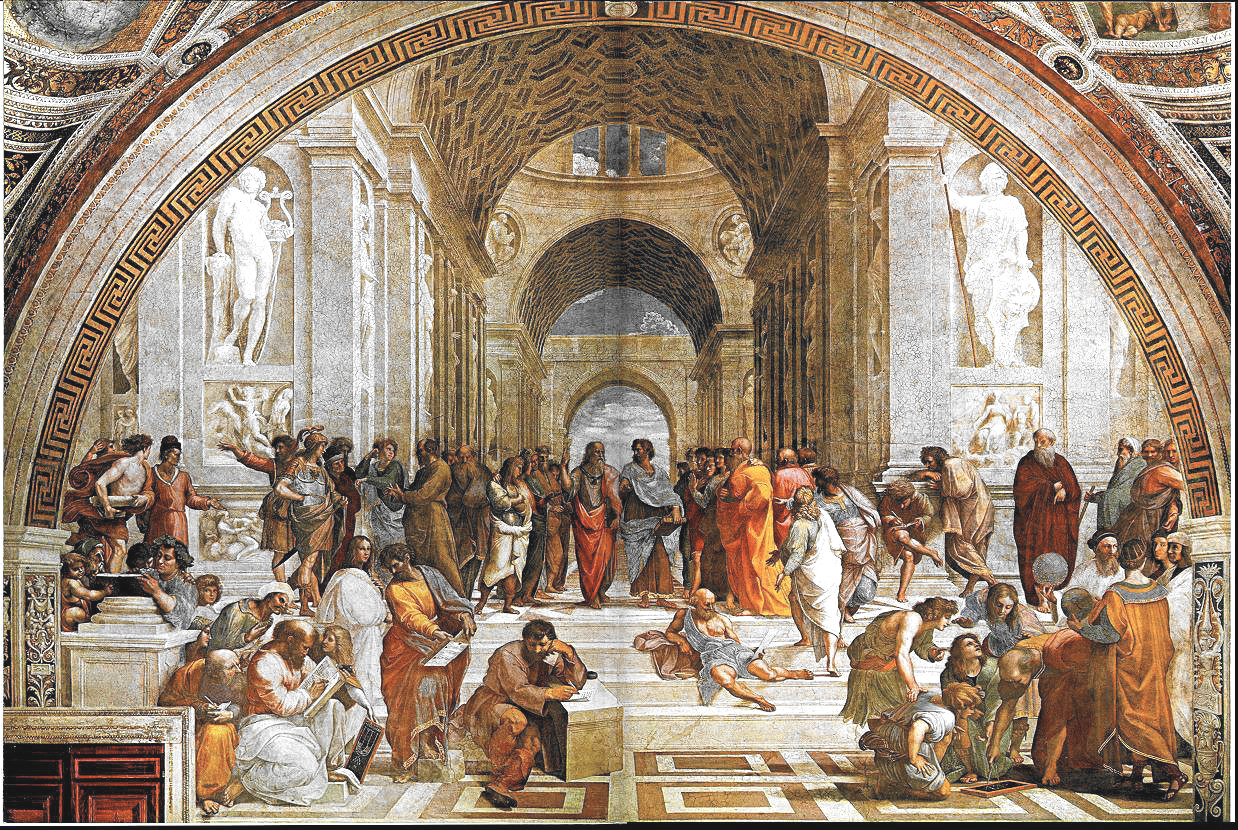
Scuola di Atene - Raffaello Sanzio da Urbino.
Q: Why do people build lists?
A: To organize the world around them.
The world is complex and often appears chaotic. Language, too, can be imprecise, mirroring the intricacies of reality itself.
We need help.
More than 5,000 years ago, clay tablets were already used for trade records, inventories and administration (taxes included), detailing goods, quantities and agreements. From those tablets to early records of daily routines, lists have long been tools that help us make sense of life, both individually and collectively.
So we simplify. We condense vast, nuanced information into a few points, and create lists that allow us to manage our thoughts, prioritize actions, and collaborate with one another. Lists prevent us from being overwhelmed by the layers of stories and data that shape our existence. They distill complexity into actionable items that help us when we need to stay focused and avoid getting lost in details.
In our day-to-day lives, shoppers rely on simple lists to streamline their errands. Productivity enthusiasts craft task lists to boost efficiency. Collectors meticulously record their items. And the curious minds who thrive on facts keep lists of trivia and information, delighting in the organization of knowledge.
Yet some of us love lists more than the rest. We go beyond simply creating lists—and focus on capturing specific attributes of the items being cataloged, to make large sets of data easier to organize and distill. By breaking down details into clear, structured elements, these lists allow individuals to analyze, compare, and draw insights efficiently.
Mathematicians love lists of numbers. Chemists have cataloged all known elements into the periodic table, where each element is described using consistent properties such as atomic number, mass, and reactivity (yep, they even made a list of everything we’re made of). Botanists classify plants by attributes like leaf shape, growth habits, and ecological role. Biologists create taxonomies that list organisms based on shared characteristics. These structured lists transform vast amounts of data into manageable, searchable, and understandable formats, making complex knowledge accessible.
Among all people, we software engineers probably love lists the most. In fact we love lists so much, we further organized them into many lists of types of lists—talk about dedication. Yes, there is something funny about the many ways we use lists everyday without quite thinking about it. It’s nearly impossible to write code without using them in one form or another.
But it doesn’t stop there. The real magic is in how we use our love for lists to create tools that help everyone—not just programmers—build, manage, and make sense of their own lists. Whether it’s organizing data, automating tasks, or building apps, lists are at the heart of what we do.
And it’s not just individuals making sense of their thoughts and actions—our entire economy and major collaborative projects, whether in corporations or scientific endeavors, rely on lists to organize work and manage interactions effectively. The car assembly line runs on parts lists. Space missions fly on checklists. The Human Genome Project produced a list three billion letters long. At every scale, lists have been at the core of organizing knowledge and guiding actions—far beyond what any one of us could keep in our head.
And here's the thing: once a list item has attributes, it's no longer just a line. It's a type of thing, its attributes connect it to other things, and the list quietly becomes a small model of the world. That's what we build: a place where your lists can grow into that model, without you having to become a programmer first. How things connect is its own story—see Relationships.
So, yes, lists might be simple, but their impact runs deep in the ways we organize, simplify, and improve our world.
First on your list: start a list.
Next? That's up to you.